Premium Brands Don’t Need to Add More Value, They Sell Identity.
- Uncategorized
- March 17, 2026
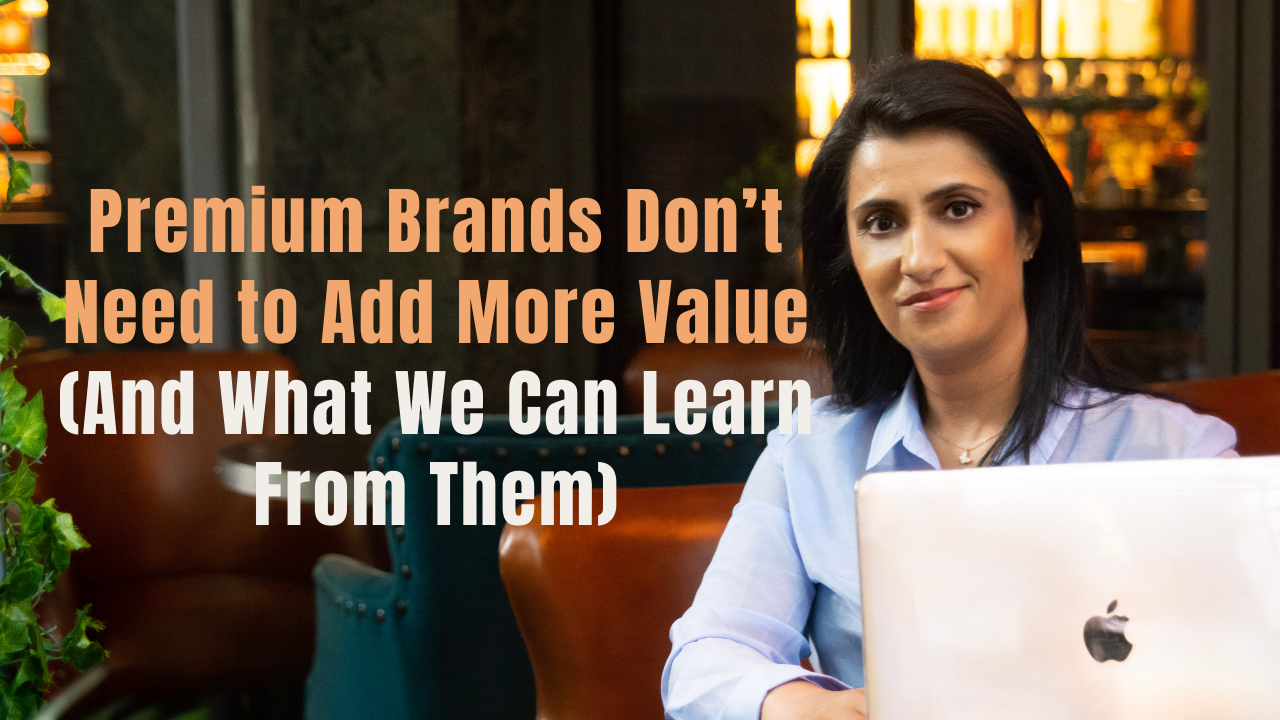
I recently spent over £3,000 on a new Apple MacBook Pro from Apple.
That’s not the shocking part.
The surprising part is that for that price… it doesn’t even come with a plug.
No charger in the box.
And yet millions of people, myself included, continue to buy Apple products without hesitation. The Apple iPhone, Apple AirPods, and MacBooks sell in extraordinary numbers every year despite competitors often offering better specifications on paper.
So why does Apple continue to dominate the premium market?
Because Apple doesn’t sell technology.
They sell identity.
Apple Doesn’t Win on Features
If you compare specifications across brands, Apple rarely wins on raw features.
Plenty of laptops offer longer battery life than a MacBook. Several smartphones outperform the iPhone in camera specifications. And many wireless earbuds stay in your ears more securely than AirPods.
Yet none of that seems to dent Apple’s appeal.
That’s because Apple has mastered something far more powerful than feature comparison: premium positioning.
People don’t buy Apple purely for what the product does. They buy it because of what owning the product says about them.
Buying Apple signals that you value:
- Thoughtful design
- Simplicity and elegance
- A seamless technology ecosystem
- A modern, creative identity
In other words, customers aren’t buying a laptop. They’re buying alignment with a brand that reflects who they believe they are, or who they aspire to be.
The Mistake Most High-Ticket Sellers Make
In the online business world, particularly in high-ticket sales, there’s a common instinct: add more value.
- More modules.
- More bonuses.
- More coaching calls.
- More templates.
- More content.
The assumption is that if the price is high, the offer must be stacked with extras to justify it.
But here’s the reality: clients are rarely looking for more.
They’re looking for certainty.
When someone invests thousands into a programme, service, or offer, their primary question isn’t:
“What else do I get?”
It’s:
“Will this actually work for me?”
Clarity Beats Quantity
The real reason Apple can sell premium products without stuffing the box full of extras is simple: clarity.
Apple products feel easy to buy.
Not because they include more items, but because what’s included feels intentional, refined, and aligned with the buyer’s expectations.
The brand communicates one clear message: this product is designed for people who appreciate quality, design, and simplicity. They always sell the identity that is so recognisable for their products.
That level of clarity reduces friction in the buying decision.
And the same principle applies to high-ticket offers.
When your positioning is sharp and your promise is clear, clients don’t need endless bonuses to justify the investment. They simply need confidence that your offer will deliver the transformation they’re seeking.
Positioning Creates Premium Demand
Premium brands focus less on adding extra value, and more on making the core value unmistakable.
Instead of asking:
“How can we add more?”
They ask:
“How can we make the outcome clearer, stronger, and more desirable?”
In high-ticket sales, this shift is crucial.
Padding an offer with extras can actually weaken the perceived value. Too many components create confusion, overwhelm, and decision fatigue.
A sharp offer does the opposite. It makes the path to the result feel precise and achievable.
That’s why premium positioning wins.
The Real Lesson for High-Ticket Entrepreneurs
If you want to lead in the high-ticket space, the solution isn’t to keep adding.
It’s to refine.
Sharpen your positioning.
Clarify the transformation.
Communicate the identity your offer aligns with.
Because when the message is strong enough, people don’t need convincing with extra bonuses.
They already know it’s for them.
And when that happens, the buying decision becomes easy.
Just like buying a MacBook that doesn’t even come with a plug.
Although… if anyone does happen to have a spare charger for my MacBook Pro, I’d happily borrow it.